Last updated : September 17, 2026
Singaporean law sadly restricts gambling nationwide, leaving Singaporean casino fans with limited platform options. Fortunately, offshore platforms fill the gap in the market.
In 2026, many international casinos accept Singaporean players, but the best ones cater to them specifically, offering convenient SG banking methods and games tailored to Asian tastes.
In this guide, we recommend and review seven sites that excel at accommodating Singaporean gamblers. By the end, you’ll know how to gamble in Singapore safely, access the top sites discreetly, pay for your play privately, and withdraw your winnings without delay.
The Best Online Casinos in Singapore at a Glance















- MD88: Play Asia’s most popular slots on mobile & enjoy reliable 20% daily reloads.
- BK8: Claim a 288% welcome match & use it to explore over 2,500 gaming titles.
- UEA8: Spin slots strategically with clear RTP stats & climb the VIP ranks to earn perks.
- GemBet: Wager on over 15,000 casino titles & claim sports betting rebates every week.
- 12Play: Access 4D lottery draws & boost your budget with 10% daily reloads.
- Bet Goat: Deposit crypto without limits & wager on 5,100+ provably fair casino games.
- Playdash: Browse 8,000 games & participate in daily “Loot Box” cash drops.
Welcome Bonus Face-Off: Comparing Our Top SG Sites’ Opening Offers
Sign-up promotions are the first impressions new players get of any new casino site. So, naturally, it’s the first thing to consider when selecting a new site. To see how the welcome packages of our recommended Singapore online casinos stack up against one another, check out the table below.
| Welcome Bonus | Rating | |
| BK8 | 288% first deposit match up to SGD 2,880 | 5.0 /5 |
| UEA8 | 100% first deposit match up to SGD 1,888 | 4.9 /5 |
| GemBet | 250% first deposit match up to SGD 1,000 | 4.8 /5 |
| MD88 | 288% first deposit match up to SGD 2,880 | 4.7 /5 |
| 12Play | 100% first deposit match up to SGD 300 | 4.6 /5 |
| Bet Goat | 100% first deposit match up to 300 USDT (~SGD 402) | 4.5 /5 |
| Playdash | 300% first deposit match up to SGD 1,500 | 4.4 /5 |
What The Best Online Casino Singapore Sites Have in Common
If you are going to trust our recommendations, it’s only right you should know how we rank our approved platforms. The process is simple. To earn our approval, our recommended sites must pass several stress tests. The title of ‘best online casino Singapore’ belongs only to the elite platforms that excel across every category. Here are the non-negotiable standards a site must pass to earn your trust and our recommendation.
| Required Standard | |
| Legitimate Licensing | For us, a casino license is the first sign of a decent casino site. All of our top-rated Singapore sites have active licenses, ideally from respected regulators like Curaçao, PAGCOR, or Anjouan. |
| Convenient Banking | Transactions at our top sites must be reliable. We recommend platforms that process direct SGD rails like PayNow and FAST, in addition to cryptocurrencies. |
| Fairness Certification | Some guarantee of game fairness is another non-negotiable requirement. The sites we recommend are always verified by independent testing houses like eCOGRA, BMM, or iTech Labs. |
| Data Security | We never cut corners on security checks. To earn our approval, SSL encryption is a bare minimum requirement. Better yet, we appreciate VPN compatible sites with fair KYC requirements. |
| Responsible Gaming | Gambling safely should not always be the player’s responsibility. Reputable sites help players budget by providing tools to boost willpower, restrict spending, and track play time. |
Online Casino Singapore Sites: Comprehensive Reviews
This isn’t a typical ‘top 10 online casino Singapore’ list. This is a serious deep dive into the platforms that actually deliver what Asian players need. Our casino reviews go far beyond basic operator summaries. Expect clear comparison charts, account setup advice, and straight facts on local legislation. Read on to find the ideal Singaporean casino site for you.
1. MD88 – The Ultimate Destination for Asian Slots on Mobile
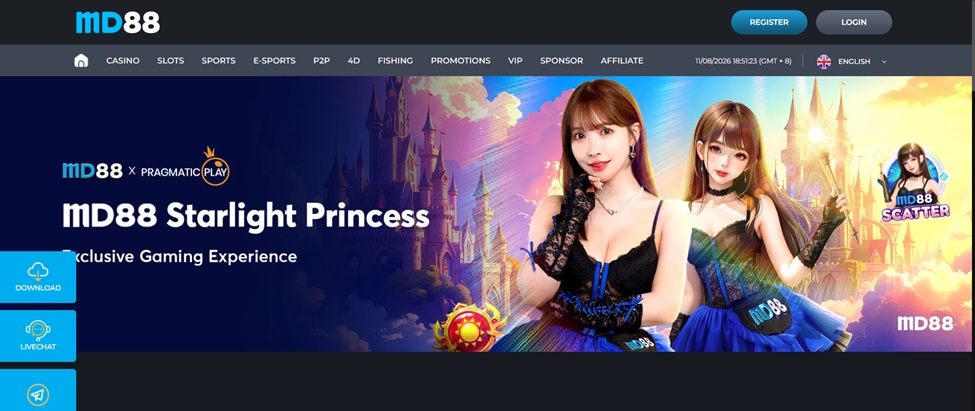
| Total Game Library | 3,000+ (High-RTP Slots & Asian Table Games) |
| Average Payout Speed | 15 to 45 minutes |
| Crypto Support | Yes (most popular tokens supported) |
| Mobile Performance | Highly stable mobile app for iOS & Android |
| Privacy, Fairness & Security | 2FA enabled, 5-step early verification |
| Customer Support | Multi-channel 24/7 support |
If you play slots on your phone, this platform is built entirely for you. MD88 offers direct access to legendary Asian slot titles, like Prosperity Horse & Nom Nom Fat Cat. Very few gambling sites carry these highly requested Asian favourites. In other words, this is a reputable slot site where Singaporean players can play the games they already know and trust.
MD88 designs their promotions to reward consistent daily play. After burning through the initial 288% welcome offer, you get a 20% reload bonus every single day. This keeps your account topped up for regular slot sessions.
Also, your loyalty turns into tangible rewards through their six-tier VIP program. Instead of handing out digital credits, this online casino in Singapore ships personalised physical gifts directly to its top players. It makes the VIP status feel genuinely special.
As for the technical aspects, MD88 continues to impress. The platform’s dedicated mobile app runs flawlessly on all devices and includes excellent two-factor authentication to keep your account safe. Just be prepared for a slightly frustrating experience when searching for niche titles in the crowded lobby.
Overall, this platform is the perfect fit for mobile slot specialists, VIP reward chasers, and dedicated daily players. Expect exclusive regional games, physical gifts, and highly dependable daily reloads.
| Pros | Cons |
| ✔️ Asian Market Exclusives: Direct access to many of the most popular online slot titles in Asia. | ❌ Clunky Site Navigation: Finding specific niche titles in the main lobby can be a chore. |
| ✔️ Consistent Ongoing Value: A reliable 20% daily reload bonus perfectly suited for everyday slot players. | ❌ Limited Banking Options: Payment infrastructure is pretty poor compared to newer, more modern rivals. |
| ✔️ Physical VIP Rewards: Unique 6-tier VIP program sends tangible, localised gifts to top players. |
2. BK8 – Reputable Platform With Impressive Regional Conveniences
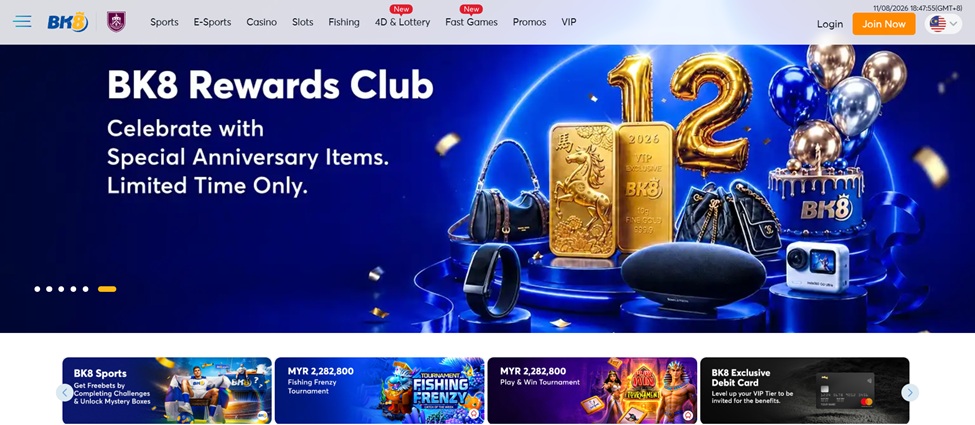
| Total Game Library | 2,500+ (Slots, Live, Fishing, Fast Games) |
| Average Payout Speed | 15 mins to 2 hours (for E-wallets/Crypto) |
| Crypto Support | Yes, including BTC & USDT (TRC-20/ERC-20) |
| Mobile Performance | Dedicated iOS & Android apps |
| Privacy, Fairness & Security | Strict KYC requirements & AML audits |
| Customer Support | 24/7 Live Chat (Priority service reserved for VIPs) |
BK8 boasts a stellar reputation as the undisputed heavyweight champion of the Southeast Asian betting market. The platform has been around for a while and is one of the best for hybrid players. BK8 blend thousands of slots, live tables, and a full sportsbook, making it one of the most well-rounded casinos in Singapore.
The BK8 banking system is built entirely around local convenience. You can easily fund your account using PayNow, or charge deposits directly to your Singtel and StarHub mobile phone bills. This makes getting your cash online completely effortless.
Newcomers to BK8 Casino can grab a 288% welcome bonus, which maxes out at an impressive SGD 2,880 potential value. Compared to other online gambling sites, the 30x rollover is low. However, that turnover applies to both your deposit and bonus funds, so keep that in mind.
As for issues, there are a couple. BK8’s KYC process is incredibly strict, requiring an NRIC, a utility bill, and proof of payment. This rigorous verification makes anonymous play tricky, but is also expected for a site with such a flawless industry reputation.
All in all, BK8 best suits casual players and generalist gamblers, though the high welcome offer will also appeal to bonus hunters and high rollers. On top of that, the convenient payment options, great reputation, and highly polished mobile apps further justify the hype.
| Pros | Cons |
| ✔️ Direct SGD Banking: Deposit effortlessly with local currency via Singtel or StarHub. | ❌ Rigorous KYC Requirements: The site enforces strict identity documentation checks before allowing withdrawals. |
| ✔️ Massive Welcome Package: The 288% deposit match is one of the biggest available at the top SG sites. | ❌ Tough Bonus Terms: Many of the sites’ most generous bonuses come with a very steep 30x rollover requirement. |
| ✔️ Polished Mobile Casino: Smartphone gamblers can download flawless apps for both iOS & Android. | ❌ Unequal Customer Service: VIP players receive priority support responses, which we feel is unfair for casual players. |
3. UEA8 – A Strategic Site with Transparent RTP Rates for Risk Takers.
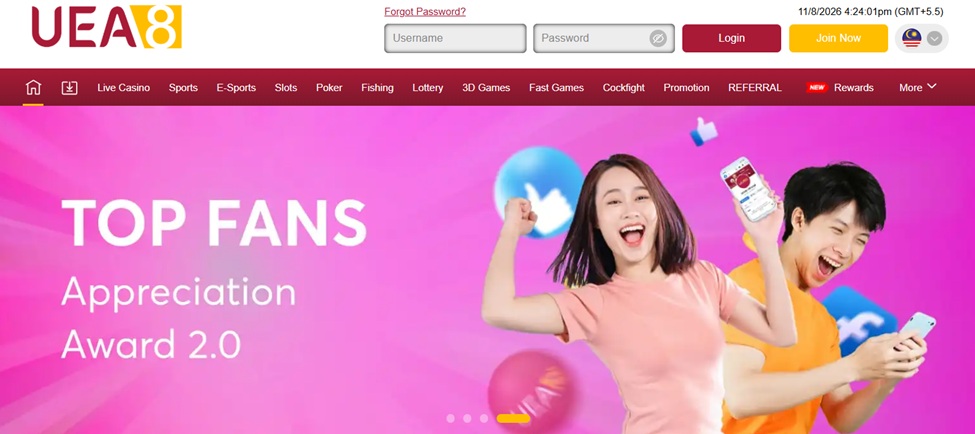
| Total Game Library | 2,500+ (Slots, Live Tables) |
| Average Payout Speed | 15 to 30 minutes |
| Crypto Support | Yes, including BTC & USDT |
| Mobile Performance | H5 browser play & mobile app with biometric login |
| Privacy, Fairness & Security | 2FA for VIPs, SSL encryption & mandatory KYC checks |
| Customer Support | 24/7 multilingual support via email & live chat |
This site is a paradise for strategic players who want complete transparency when calculating risky wagers. At UEA8, you can check the RTP data for every game directly on the title thumbnail. This helps you avoid cold games, spot statistical advantages, and pick winning slots fast.
They also aggressively target experienced players from rival Singapore online casinos with transferable VIP perks. Along with a standard SGD 1,888 welcome match, their VIP transfer bonus features an incredibly rare 1x wagering requirement. You keep what you win almost immediately.
Security at UEA8 is exceptionally high. The app comes equipped with biometric login, and the site itself is fully licensed, SSL-secured, and third-party certified. We only wish that 2FA could be activated for all accounts. Bafflingly, it’s a feature reserved for VIP players only, which seems unwise. Especially since earning VIP status requires a massive monthly deposit of 50,000 SGD.
Nevertheless, UEA8 suits aggressive high rollers, data-driven players, and serious live dealer fans. The reliable RTP statistics, 1x VIP wagering terms, and an efficient single-wallet interface offer a huge edge that strategic risk-takers will struggle to ignore.
| Pros | Cons |
| ✔️ Total RTP Transparency: You can see the Return to Player rates of every game displayed clearly on the thumbnails. | ❌ High VIP Hurdles: Climbing to the upper tiers of the VIP ranking requires steep SGD 50,000 monthly deposits. |
| ✔️ Zero Fuss Transfers: The convenient single-wallet system means no manually moving funds between casino and sports. | ❌ Sub-standard Bonus Value: The new player matched deposit offer has tough-to-beat turnover terms. |
| ✔️ Transferable VIP Status: Features an industry-best 1x wagering rule on VIP transfer bonuses. | ❌ Some Unavailable Features: Two-factor authentication is only available for VIP players. |
4. GemBet – Massive Game Library with Instant PayNow Deposits
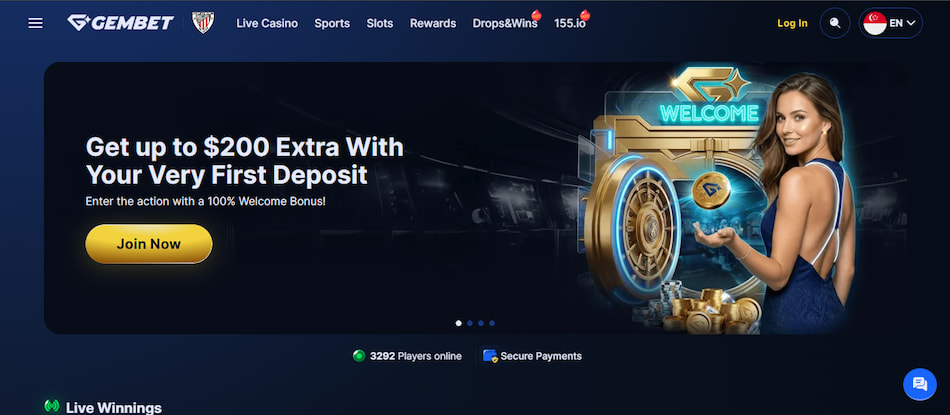
| Total Game Library | 15,000+ (From 163 industry-leading providers) |
| Average Payout Speed | 15 minutes to 24 hours |
| Crypto Support | Yes, including BTC, ETH, LTC, USDT |
| Mobile Performance | Instant-play HTML browser (No mobile app) |
| Privacy, Fairness & Security | Pre-withdrawal KYC verification & Provably Fair Games |
| Customer Support | 24/7 Multi-lingual Chat |
This platform operates on an absolutely massive scale. With 15,000 games from 163 software developers, GemBet guarantees you can play for years without ever repeating a single slot title. This sheer variety easily makes GemBet a giant among the best online casinos Singapore.
Of course, a library this big needs a flawless cashier to back it up. Fortunately, GemBet delivers. The site supports native SGD transfers and processes lightning-fast PayNow deposits. This completely removes annoying conversion fees and lets you get straight into the action.
The 250% welcome match gives you up to SGD 1,000 in extra funds. Also, for sports bettors, GemBet proves to be one of the best online casinos in Singapore. The ‘Zero Turnover Supreme Sports Rebates’ offer generously provides cashback on betting losses with zero rollover strings attached.
Our only issue with GemBet, however, is a major one, especially for high rollers. The site enforces a strict daily win cap of roughly €100,000. Yes, that’s high. But, on principle, a win ceiling feels wrong. There’s also no GemBet mobile app, so be prepared to play exclusively through your mobile browser.
When all’s said and done, GemBet is best for variety seekers, while also serving frequent sports bettors and speed-focused local players flawlessly. Sign up here if you want a massive game catalogue, flawless PayNow processing, and highly valuable sports betting rebates.
| Pros | Cons |
| ✔️ Unmatched Game Library: Over 15,000 casino titles from 163 huge providers make this a virtually endless gaming hub. | ❌ Maximum Win Limit: Daily net winnings are hard-capped at around SGD 145,000, which feels unfair. |
| ✔️ Zero-turnover Loss Rebates: Sports bettors get regular rebates on failed wagers with no messy playthrough terms attached. | ❌ Browser Play Only: The site lacks a mobile app, so you can only play on mobile via browser. |
| ✔️ Speedy SGD Banking: Tailor-made for Singaporeans with flawless PayNow processing. |
5. 12Play – Specialised eSports Betting & Regional 4D Lotteries
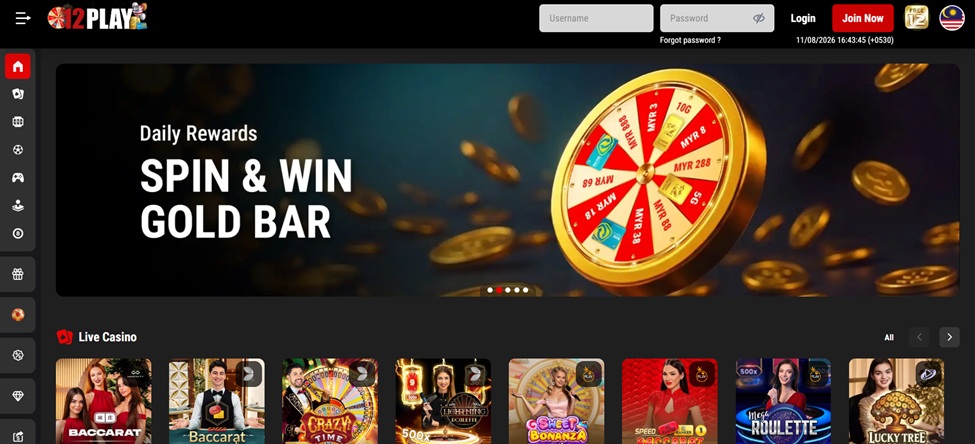
| Total Game Library | 2,000+ (Arcade, 4D Lottery, Slots, Live Dealer Games) |
| Average Payout Speed | Under 24 hours (0–1 hour for banks) |
| Crypto Support | Yes, including BTC & ETH |
| Mobile Performance | Excellent Android APK available, but no iOS option |
| Privacy, Fairness & Security | Strict ID checks, VPN friendly, transparent bonus terms |
| Customer Support | 24/7 service via Live Chat, Skype & Telegram |
12Play Casino caters specifically to local betting habits in Singapore and Malaysia. The site offers regional 4D lottery options alongside massive esports betting coverage. This sharp local focus makes 12Play a serious contender for the title of best online casino Singapore. Play here, and you’ll never have to settle for generic Western market wagers again.
Moving your money on 12Play is incredibly fast too. They clear direct local bank transfers and e-wallet withdrawals in under an hour. Android users also get a highly secure APK that locks down your account using Face ID.
New 12Play users can grab a specialised 150% esports match right away. After that, the unlimited 10% daily deposit bonus offers regular players extra value. Best of all, each reload comes with rock-bottom 12x rollover terms; far easier to clear than the brutal 40x welcome terms found at many casinos online.
However, players should know that in order to claim specific bonuses, you must send customer service a clear screenshot of your IC. Also, the 12Play privacy policy does allow third-party data sharing, which cautious players should note.
All things considered, 12Play easily suits dedicated esports bettors, regional 4D lottery fans, and Android users. Expect specialised odds, niche local markets, and a deeply secure mobile app.
| Pros | Cons |
| ✔️ Local Lottery Draws: Built-in regional 4D lottery betting you won’t find on Western sites. | ❌ License/Operator Ambiguity: The site’s licensing claims are difficult to verify, and details on the site are vague. |
| ✔️ Regular Reload Bonuses: All regular players receive a 10% daily deposit bonus with no max limit. | ❌ Data Privacy Concerns: With limited privacy policy info on the site, it’s unclear how the site handles data protection. |
| ✔️ Excellent App Security: Android users get a highly secure mobile casino app with biometric PIN locks. | ❌No iOS App: While Android users can enjoy a convenient APK app, iPhone users can only play via browser. |
6. Bet Goat – Privacy-First Crypto Casino With No Deposit Limits
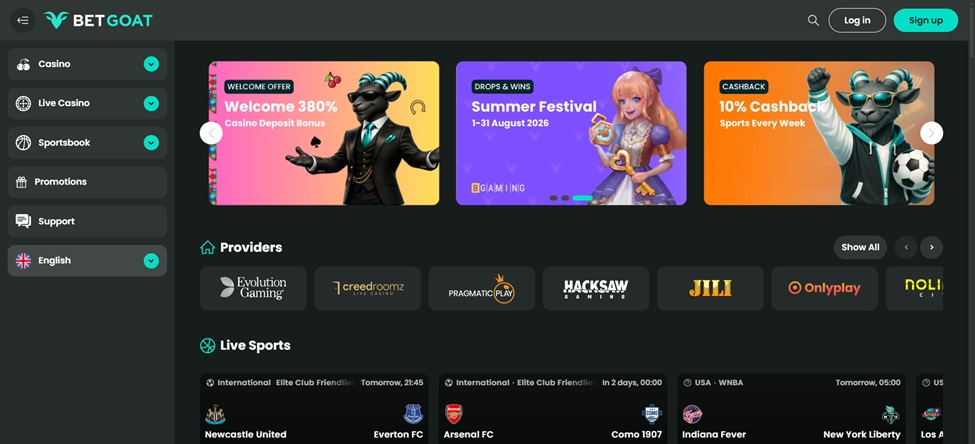
| Total Game Library | 5,100+ (4,600 Slots, 500 Live Dealer Tables) |
| Average Payout Speed | Generally same day; 30mins to 24 hours |
| Crypto Support | Yes, including BTC, USDT, ETH, TRX, SOL |
| Mobile Performance | No app, optimised mobile browser only |
| Privacy, Fairness & Security | No initial KYC requirements, lacks Two-Factor Authentication |
| Customer Support | 24/7 live chat in 8 languages (including English & Mandarin) |
If you want your betting activity off the radar, this crypto platform delivers. Bet Goat lets crypto users bypass initial KYC checks completely and speeds up registration with a simple one-page form. This total privacy and fast access give Bet Goat a massive edge over standard casinos in Singapore.
Inside, you find 4,600 slots and a high-performance sportsbook running from one single wallet. Sports punters secure genuine value here with margins sitting at a low 4.15%. You get better odds and bigger payouts on your weekend football accumulators.
The 100% first deposit match maxes out at up to 300 USDT and comes with an achievable 10x turnover. Also, high-stakes players gravitate to this online casino Singapore because it has no deposit caps.
We should say, however, that Bet Goat does require a minor compromise on the security side, as player profiles currently lack two-factor authentication. That would be an issue for us, if not for the site’s great reputation from both expert reviews and player feedback in online forums.
Overall, Bet Goat fits private players like a glove, while also accommodating high-volume crypto players and serious sports bettors. For total anonymity, uncapped transactions, and highly competitive betting odds, look no further.
| Pros | Cons |
| ✔️ Instant Account Registration: The single-page signup system and zero KYC requirements make it easy to start playing. | ❌ Lacking Security Tools: The platform currently does not offer 2FA for account protection. |
| ✔️ Elite Sports Odds: The sportsbook boasts an incredible 4.15% average margin, giving you better returns. | ❌ Casino Over Sports: While a sportsbook is available, it’s clear that casino gamers are the priority here. |
| ✔️ High-Roller friendly: Bet big without withdrawal worries, with absolutely no limits on your crypto transactions. |
7. Playdash – Interactive Daily Prizes & Huge Casino Bonuses
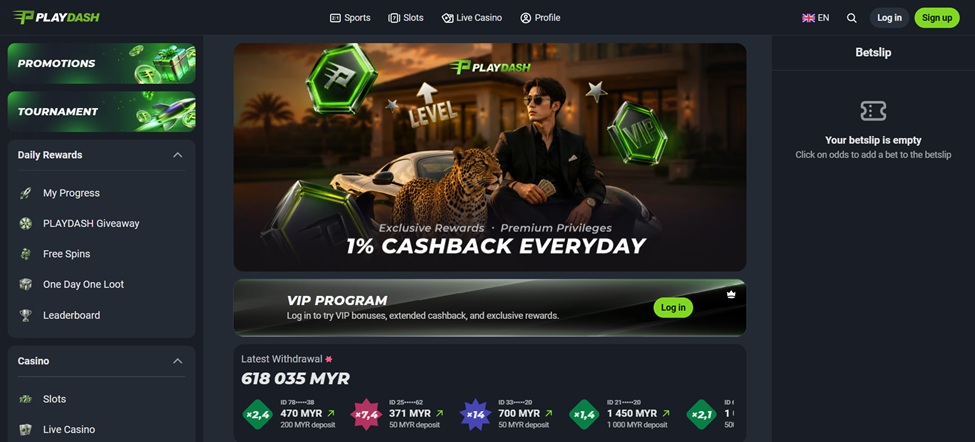
| Total Game Library | 8,000+ (Slots, Arcade, 500+ Live Tables) |
| Average Payout Speed | 2 to 25 minutes |
| Crypto Support | None (Does not accept cryptocurrency) |
| Mobile Performance | No app, but slick mobile browser optimisation |
| Privacy, Fairness & Security | ID verification is mandatory from sign-up |
| Customer Support | 24/7 Live Chat |
Playdash keeps things fresh by dropping standard promotions for daily interactive rewards. Their Loot Box prize system gives you a genuine reason to log in every day. This makes Playdash a highly engaging Singapore online casino where you can expect constant value for your playtime.
The sheer volume of options at Playdash Casino is staggering, packing 8,000 titles and 4,000 weekly sports fixtures. Plus, new players get massive firepower right from the start. Grabbing their 300% welcome package up to SGD 1,500 builds a strong case for calling Playdash the best online casino in Singapore.
For payments, Playdash completely rejects crypto and focuses entirely on fiat transfer options. This isn’t ideal for everyone, of course, but if you favour fiat anyway, it’s a non-issue. Expect lightning-fast SGD processing that hits your account in under twenty-five minutes, saving you the headache of managing wallets or paying exchange fees.
It’s also worth noting that, in order to withdraw winnings, you’ll need to pass strict checks. This process involves sending your ID directly to the site’s support team through live chat. Private players won’t like that one bit.
Drawbacks aside, however, Playdash still easily suits daily players, fiat purists, and aggressive bonus hunters. Users can enjoy regular interactive loot drops, fast local payouts, and big match offers that actually deliver real value. What more could you want?
| Pros | Cons |
| ✔️ Gamified Loyalty Rewards: The “Loot Box” system gives active users fun, interactive daily prizes. | ❌ No Crypto Options: The site completely rejects all cryptocurrency, strictly accepting traditional cash. |
| ✔️ Massive Casino Match: The 300% welcome package for casino players is exceptionally high. | ❌ Unorthodox User Interface: The unique site layout can feel slightly confusing, and the UI is clunky. |
| ✔️ Reliable Fiat Payouts: Local currency withdrawals hit your account in under half an hour. |
Unique Selling Points of Our Top-Rated Casinos in Singapore
Every player values something different. For you, it might be instant withdrawals, huge slot bonuses, or massive live dealer lobbies. Meanwhile, another player might prioritise transparent payout percentages, crypto deposit options, and high-limit VIP structures. That’s why our top-ranked sites are so varied, with wide-ranging specialities and features. The breakdown table below reveals exactly where the leading online casinos excel. Use it to easily find the casino that fits your betting style.
| Unique Selling Points | Rating /5 | |
| MD88 | 1. Hosts highly popular slots that run flawlessly on mobile. 2. 6-tier VIP program that awards personalised physical gifts. 3. 20% daily reload bonus for consistent slot players. | 5.0/5 |
| BK8 | 1. Convenient Singapore banking (PayNow, Singtel, StarHub). 2. Multi-product platform linking slots, live tables, and sportsbook. 3. Enormous 288% welcome bonus, worth up to SGD 2,880. | 4.9/5 |
| UEA8 | 1. RTP (Return to Player) data displayed on all game thumbnails. 2. Single-Wallet system, so no need for manual SGD transfers. 3. 1x wagering requirement on the VIP Transfer Bonus. | 4.8/5 |
| GemBet | 1. Rapid PayNow deposits and native SGD currency support. 2. Massive global library of over 15,000 casino games. 3. Player-friendly “Zero Turnover Supreme Sports Rebates”. | 4.7/5 |
| 12Play | 1. Highly convenient bank and e-wallet transfers for SG players. 2. Asia-first platform featuring regional 4D lottery draws. 3. Unlimited 10% daily deposit bonus. | 4.6/5 |
| Bet Goat | 1. One-page registration with no KYC checks for crypto users. 2. Massive 4,600+ slots library and a full crypto sportsbook. 3. Excellent 4.15% average sports betting margins. | 4.5/5 |
| Playdash | 1. Innovative “Loot Box” daily prize system for active players. 2. Rapid processing of SGD/SGC local currency payouts. 3. Exceptionally high 300% casino welcome package. | 4.4/5 |
Step-by-Step: How to Safely Join a Singapore Online Casino
Jumping straight into registration without a plan can expose your data and delay cashouts later. Setting up your casino account correctly from day one is the best way to secure your identity and guarantee smooth access. Follow this 4-step process to sign up at top Singapore online casinos safely.
1. Selecting a Verified Operator and Mirror Domain
Local internet providers block overseas gambling addresses, forcing operators to use alternative mirror URLs. This creates a hunting ground for fake clone sites hoping to steal your login details. Always source links straight from trusted reviews rather than clicking random casino ads. Check the padlock icon in your browser to confirm the connection is secure before typing a single character.
2. Completing Registration and Proactive KYC Verification
Sign up using your actual, verifiable details. Faking a name might feel safer initially, but it guarantees a rejected withdrawal when the site asks for your ID. Beat the compliance checks by uploading your identification documents as soon as you register. Clearing this hurdle early means you get your hands on your winnings without weeks of administrative headaches.
3. Funding Your Balance via Localised Channels
Keep your gambling money completely separated from your everyday banking. Most established online casinos support discreet payment gateways like PayNow or digital stablecoins. These methods keep your betting activity off domestic financial statements. Pick a dedicated funding route and stick to it for both deposits and withdrawals to keep your cash flow predictable.
4. Claiming Bonuses and Configuring Account Limits

Welcome offers look great until you read the fine print. Check the wagering requirements to see how much you actually need to play through before cashing out. If a bonus ties up your deposit unfairly, ignore it. Finally, set strict daily loss limits in your profile settings. Decide your absolute cut-off point before the games begin.
Must-Know Regulatory Facts For Singapore Online Casino Fans
Singapore laws heavily restrict commercial gambling. Playing from restricted regions means understanding exactly where the lines are drawn. Here is what you actually need to know about staying compliant and keeping a low profile.
1. The Gambling Regulatory Authority & Gambling Control Act 2022
The Gambling Control Act 2022 gave the GRA sweeping powers to block domestic access and intercept payments to foreign operators. This legislation actively targets criminal syndicates and local hosts rather than private punters playing quietly at home. When you hunt for the best online casinos in Singapore, realise that the state focuses its resources on shutting down operators, generally leaving individual players to their own devices.
2. International Jurisdictions and Offshore Operating Models
The best online casinos Singapore operate safely from overseas, totally outside local jurisdiction. Legitimate foreign platforms hold official licenses from gaming authorities in Curaçao, Anjouan, or the Philippines. These credentials mean the operator is legally bound to honour payouts, protect your data, and host fair games. Playing at an offshore online casino gives you the protection of these global commissions, compensating for the lack of local oversight. Stick to vetted offshore sites to ensure you never get scammed.
3. Player Protections, Financial Channels, and Practical Realities
Your biggest practical risk is your local bank freezing your account for sending money to a gambling merchant. Keep your head down by using virtual private networks to mask your location. Better yet, fund your accounts at Singapore online casinos using non-custodial crypto wallets. As a bonus, local tax laws treat recreational gambling windfalls as tax-free, meaning you keep exactly what you win.
4. Foreign Licensing Authorities Regulating Casinos in Singapore
As the Singapore government refuses to license private gambling sites, players must rely entirely on foreign regulators to enforce fairness and protect your funds. But several regulatory bodies exist, and not all are equally respected or reliable. The table below highlights the main licensing authorities in charge of offshore online casinos in Singapore, showing how they differ in approach and practice.
| Regulator | Core Player Protections | Industry Reputation |
| Curaçao eGaming | Audits random number generators and monitors crypto traffic | Most common license for operators targeting Asia |
| PAGCOR | Enforces strict compliance and conducts physical office raids | Central government gambling hub in the region |
| Anjouan Gaming Board | Verifies corporate ownership and enforces data privacy | Emerging quickly as a popular alternative for bookies |
| Isle of Man GSC | Mandates ring-fenced player funds and strict arbitration | Top-tier standard preferred by massive corporate operators |
| Malta Gaming Authority (MGA) | Demands aggressive fraud auditing and strict cash separation | Highly trusted European license offering strong consumer safety |
Comparing Cryptocurrency vs E-Wallets at SG Online Casinos
How you move your money matters just as much as where you choose to play. Players funding accounts at Singaporean casinos generally stick to two distinct lanes: local digital fiat like PayNow, or crypto assets like Tether. The choice comes down to a direct trade-off between privacy and convenience.
1. Transaction Speeds and Settlement Times
Fiat deposits hit your balance immediately, getting you into the action without delay. The frustration kicks in when you try to cash out, as fiat withdrawals require manual approval from finance teams at online casinos. Crypto flips this dynamic. While deposits might take a few minutes to confirm on the blockchain, your withdrawals process incredibly fast once approved, hitting your personal wallet 24/7.
2. Privacy, Anonymity, and Financial Oversight
Linking your personal bank account to an online casino Singapore creates a permanent, visible paper trail. Local banks actively monitor accounts for suspicious activity and will freeze funds tied to betting. Moving to private crypto wallets eliminates this risk. The blockchain acts as a firewall between your gambling funds and your domestic financial identity, ensuring total discretion.
3. Network Fees and Volatility Exposure
Sending cash via PayNow costs no fees. Crypto transactions, however, rely on network gas fees that shift depending on how busy the blockchain gets. You also face price swings if you bet using Bitcoin or Ethereum at a Singapore online casino. Smart players avoid this volatility entirely by betting with stablecoins like USDT, which hold a fixed value against the dollar.
4. Everyday Usability and Ease of Setup
Nothing beats the simplicity of scanning a PayNow QR code directly from your phone. Buying crypto takes a bit of upfront effort: set up an exchange account, verify your identity, and buy tokens. But once you clear that initial hurdle, crypto provides totally unrestricted betting access, making it the superior long-term choice for the best online casino in Singapore.
5. Trusted Online Casino Singapore Payment Methods

All of our top-rated casinos in Singapore stand out by offering convenient and diverse deposit methods. But each one approaches transactions differently. Some of our recommended sites favour stealthy deposit lines like direct telco billing or zero-fee PayNow transfers. Others, meanwhile, prioritise anonymous cryptocurrency rails. This table explains how our top Singapore sites handle your cash.
| Supported Options | Payout Speed | Key Cashier Advantage | |
| MD88 | E-wallets, bank wires, crypto | 15 to 45m | Pre-cleared KYC speeds up withdrawals |
| BK8 | PayNow, telco billing, banking, USDT, BTC | 15m to 2h | Direct Telco mobile deposits |
| UEA8 | Bank wires, E-wallets, major crypto | 15 to 30m | Unified SGD balances for all games |
| GemBet | SGD banking, PayNow, BTC, ETH, USDT | Under 24h | Fee-free PayNow processing |
| 12Play | SG/MY banks, E-wallets, BTC, ETH | Under 1h | Exceptionally fast regional fiat clearance |
| Bet Goat | Pure crypto: BTC, USDT, ETH, TRX | Under 1h | No deposit limits and zero paperwork |
| Playdash | Fiat support via local SGD transfers | 2 to 25m | Lightning-fast local currency payouts |
Variety of Online Slots at Singapore Online Casinos
Modern Singapore online casinos offer far more than basic one-armed bandits. Punters now choose between old-school fruit formats, high-speed Megaways, specialised local mobile apps, massive linked jackpots, and fast-paced cluster mechanics. Knowing exactly how each style operates gives you a serious advantage in managing your betting funds and matching your true risk appetite.
1. Traditional Three-Wheel Formats
Old-school players prefer basic three-wheel formats for their simplicity. You get straightforward one-to-five line setups, classic fruit symbols, and zero confusing bonus distractions. Spinning these traditional games at an online casino in Singapore offers predictable, low-volatility action that stretches your playtime far longer than modern alternatives.
2. High-Variance Megaways Titles
Megaways mechanics randomly resize the grid on every spin, creating up to 117,649 ways to win. Winning symbols shatter on impact, dropping fresh icons for potential chain-reaction payouts. Top-rated online casinos in Singapore offer these aggressive options for gamblers hunting massive multiplier hits rather than slow drip-feeds.
3. Localised Asian APK Platforms
Slot apps completely rule the local smartphone betting scene. Western casinos online rely heavily on browser setups, but these dedicated APKs deliver an experience built exclusively for the Asian market. You get rapid loading times, tight wallet integration, and lightweight software that keeps your betting sessions discreet and completely private.
4. Network Jackpots and Must-Drop Prizes
Networked games skim a fraction of every wager to feed a central pool. That top prize swells endlessly until someone on the wider online casino circuit hits the winning combination. For more predictability, target daily must-drop variants that guarantee the pool will burst before hitting a strict time limit.
5. Cluster Grids and Bonus Buy Mechanics
Cluster formats scrap standard paylines entirely, awarding wins when matching symbols touch in adjoining blocks. Developers often pair these grids with a direct purchase option. Instead of grinding through base spins, you pay a premium to jump straight into the bonus rounds, directly accessing the game’s peak volatility immediately.
Live Dealer Gaming Options at Singaporean Online Casino Sites
Live streams drop an authentic casino environment directly onto your screen. Top Singapore gambling sites broadcast professional croupiers handling physical cards in high definition, entirely removing any doubts about software fairness. You can choose from seven distinct formats, covering classic cards, fast dice games, interactive shows, and secluded VIP suites.
1. Authentic Baccarat and Squeeze Tables
Baccarat dominates Asian betting floors. The leading Singapore casinos online broadcast classic rules alongside zero-commission tables. To replicate real floor tension, target squeeze tables where cameras zoom in as dealers slowly roll card edges.
2. Real-Time Roulette and Multiplier Wheels
Stick strictly to European single-zero wheels to cut the house edge. For a volatile approach, try multiplier titles like Lightning Roulette. These variants use standard wheel physics but assign random multiplier boosts up to 500x before the ball drops.
3. Unlimited Seat Blackjack Action
Traditional seven-seat blackjack mimics the pace of a physical casino. If spots fill up, infinite tables deal one communal hand to unlimited players, eliminating wait times. A quality online casino also lets you back-bet on winning seats and place secondary side wagers.
4. Regional Favourites: Sic Bo and Dragon Tiger
Sic Bo uses three dice bouncing in a glass shaker, offering dozens of ways to predict totals. Dragon Tiger is lightning-fast, dealing just two cards. You back the higher card. It is unforgiving and heavily favours momentum betting.
5. Carnival-Style Game Shows
Titles like Crazy Time blend physical prize wheels with augmented-reality bonus stages. Enthusiastic hosts manage digital pachinko walls and coin flips. These low-stakes broadcasts are pure entertainment, breaking up intense card sessions.
6. Localised Asian Streaming Providers
Studios like SA Gaming and Sexy Baccarat build floors specifically for the Asian market. Operating from Manila, they provide Mandarin-speaking croupiers and detailed trend roadmaps, dominating the lobbies at all top-tier Singapore online casinos.
7. Exclusive VIP Salon Privé Suites
Heavy hitters demand absolute discretion. Salon Privé suites cater to massive budgets by enforcing five-figure minimums and restricting access to a single player. You command the dealer, request shoe changes, and play in total isolation without spectator scrutiny.
Final Thoughts: Choosing the Best Online Casino in Singapore
Singapore may make online gambling for residents more complicated than it needs to be, but that doesn’t mean Singaporean casino fans are short on options. In this article, we ranked, reviewed, and recommended 7 top options, all perfect for Singapore players, no matter their experience level or expectations.
Of course, your experience does depend on choosing a platform that fits your personal requirements. From our recommended Singapore online casino list, you have choices ranging from slot gaming specialists to serious sportsbooks and live-game-focused hubs.
Consider your betting habits before you commit money to any Singapore casino online. Then, if you are still struggling to decide between the top options, we have one final way to help you out.
Sorting Singapore Online Casinos by Player Preference
The matrix below pairs specific player priorities with the operator best equipped to handle them. Use it to lock in your final choice.
| Player Priority | Ideal Site | Our Reasoning |
| Slot Options | MD88 | Tailor-made for Singaporean slot fans, MD88 is a top choice, known for hosting many of the Asian market’s favourite titles. |
| All-Around Quality | BK8 | With a stellar reputation, 2500 games, SGD payments, and a mobile app, BK8 is ideal for Singaporean players who want it all. |
| Fairness & VIP Perks | UEA8 | Perfect for experienced bettors, UEA8 guarantees fairness with clear game RTP displays and rewards regular play with a valuable VIP scheme. |
| Endless Variety | GemBet | Offering an unparalleled 15,000+ casino game library, GemBet doesn’t just beat competitors; it utterly eclipses them. |
| 4D Lottery Bettors | 12Play | Caters to distinct local tastes with regional 4D lottery integration, providing huge cash prizes and promising swift same-day payouts for winners. |
| Crypto Bettors | Bet Goat | Ideal for those who value anonymity, Bet Goat ensures a privacy-first setup for crypto users with no KYC at registration and uncapped crypto limits. |
| Daily Rewards | Playdash | Best suited for players who log in daily, Playdash rewards regular players with a unique daily “Loot Box” incentive, among other ongoing offers. |
Regardless of which online casino Singapore you choose, rest assured you’re selecting a sound option, vetted and play-tested by our industry experts. That said, we must still remind you to gamble responsibly. Even on the safest casino sites Singapore has to offer, it’s easy to get carried away. Staying in control is, ultimately, your responsibility.
So, set hard limits for deposits and losses before you log in. Keep your gambling funds separate from your everyday finances, and be prepared to walk away when the session stops being fun. More importantly, however, have fun.